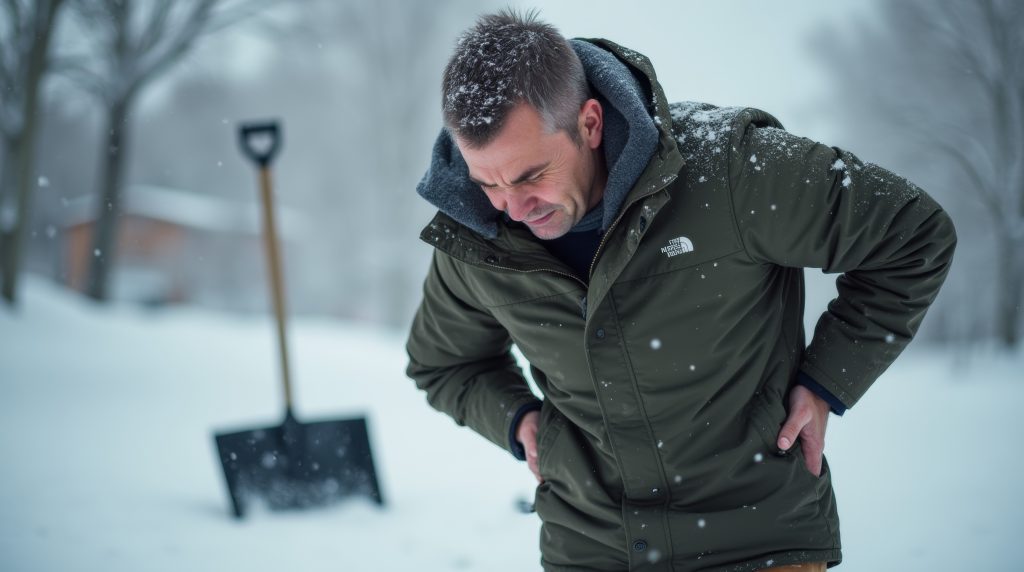
We’re only part way through winter, and folks with snow shoveling injuries are pouring into the virtual PT clinic. I’ve treated shoulder strains, nerve injury from falling, knee clicks and hip aches. But there’s one problem that I see most this time of year–back pain.
Snow shoveling puts 11,500 Americans in the ER every year, and lower back pain is the number one complaint. It makes sense; shoveling is demanding, your mechanics get altered, and dangit, you have to get to work, so hurry up and shovel! This is what happened to my patient, Jolene, a school teacher. I’ll share how we got Jolene better after a bad snow shoveling injury, and I’ll share things you can do to avoid getting hurt this winter.

Jolene Hurt Her Back, and It was Getting Worse, Not Better
Jolene is an elementary school teacher in Minnesota who was out shoveling after a November snow storm. She felt something pull on the right side of her low back, and tried to go easy for a couple weeks. But the snow kept coming and her Fall Term continued. A week into December after yet another snow storm, Jolene reinjured her back and went to see her primary care doc, who sent her to me.
“Mornings are the worst,” Jolene told me at our first virtual visit, “I’m losing about 2 hours of sleep every night.” Jolene was dealing with low back pain and nerve pain that ran into her glute, outer calf, and her foot. I can tell you as a physical therapist of over 10 years, nerve pain is one of the meanest pains out there.
Figuring Out What’s Causing the Pain
When people are dealing with back pain and pain radiating down their leg, it means a nerve in your back is being compressed. Some common reasons a nerve gets compressed are disc herniations (slipped/bulging discs) and back muscle strains that create tightness in your spine. It’s important to figure out what is causing the compression, because the approach for correcting a disc herniation versus a spinal muscle strain are dramatically different. Selecting the wrong approach can set people back and make the problem worse.
For Jolene, it was a spinal muscle strain that caused her entire low back to seize up, which then reduced the amount of space the nerve had as it exited her spine en route to her leg.
How Jolene Recovered
We started gently. If your entire low back is tense and guarded, you need to first introduce movement at a light level to let your back know it’s safe to relax. Intense stretching and trying to force your back to loosen up often backfire if introduced too early. Jolene’s back slowly loosened up over a couple weeks, and she noticed the pain that had traveled all the way down to her calf and foot now only went as far as her glute. As a clinician, I love hearing this, because it means the compression on the nerve is lessening, and the exercises we’re doing are the right ones.
Her 8/10 morning pain went down to a 5/10, and the stretches that used to feel tender now just felt like good stretches. Safe to move into some strengthening, we progressed into some core exercises and began strengthening her back muscles. While it sounds odd to strengthen a muscle group that was just tight and seized up, it’s important. Just because muscles are tight doesn’t mean they’re strong. When we could work on back strength without causing muscle spasms we did. Jolene will need this added back strength for her life in the future, especially for shoveling.

After about 5 weeks, Jolene’s back pain was gone. She was back to sleeping normal, she’d returned to her classroom after winter break without issue, and she got back to snow shoeing and walking her dog, Oakley, without any problems.
“My goal now is to just gain strength, overall,” Jolene told me at our last visit. She doesn’t want this to become a chronic problem, and strengthening and stabilizing the muscles of her back, core, and hips will help prevent this from coming back. As her physical therapist, I already feel good about Jolene’s recovery, but I feel even better about her physical health going into the future based on what we are working on now.
How Do I Avoid Getting Hurt Shoveling?
The best way to recover from injury is by avoiding it in the first place. In an article written by the Lawn Love folks, I was an expert who weighed in on tips for avoiding injuries with shoveling. You can read those tips here.
Some of the keys in avoiding injury are warming up, taking breaks, and not overfilling your shovel, especially if the snow is wet. But I think the biggest impact comes in knowing your body. Have you prepared your body for a 45 minute strenuous shoveling task? Not just by warming it up, but are you an active person who can handle this? If you’ve been on the couch for most of the cold winter without exercising, then I’d guess no, you probably can’t handle it. That doesn’t mean you’re hopeless, it just means you have to start taking active steps to get your body stronger in a safe way–not just for shoveling, but for life.
I Already Hurt Myself; Now What?
If you’ve already injured yourself–your back, your shoulder, your knee, your whatever–you need to start working on your recovery. Resting is not recovery. I repeat, resting is not recovery. Resting might reduce your pain temporarily, but it’s not strengthening, stretching, or stabilizing the muscles you have injured. So when you try shoveling again or returning to normal activities after rest alone, you’re much more likely to feel the pain return and reinjure yourself.

The first productive step in recovery is to put a light level of stress on your injured muscles–stress can come in the form of light stretching, light strengthening, and light stability work. From there, you need to graduate, or slowly increase, the amount of stress you’re putting on your muscles to help them heal.
In my opinion, this rarely goes well on your own, and working with a professional like a physical therapist is going to help your recovery go more smoothly; by working with a professional, you’re also less likely to have this become a chronic problem. If you want, you can work with me–we’ll do everything online, so you don’t have a commute, and telehealth works and is extremely convenient.
What Should I Do Next?
If you want to get your recovery started and make sure you’re doing the right exercises to get you feeling better, you can work with me. I do everything online with my studio, motivPT. And studies show that patients are more likely to stick with their exercises when received through telehealth. Which is good news for everyone, because people who do their home exercises hurt less, function better and have improved quality of life in the short term and maintain those things in the long term.
I, Dr. Alex, am here to support you every step of the way, no matter where you are. Book your free 15-minute consult to talk with me about your concerns and learn more about how we work! My online physical therapy and personal training can help you regain what you thought you’d lost and go strongly into your future.
At motivPT, we believe your body deserves to feel great.