Online physical therapy · Sprained Ankle
With online physical therapy for a sprained ankle, you work one-on-one with a physical therapist by video and follow a plan built for your ankle, at home, without the drive to a clinic.


Some ankle injuries need an exam or an X-ray before physical therapy. See a doctor or go to urgent care if, after the injury:
If anything like this comes up during your plan, your physical therapist will tell you to get it checked.
A short follow-along exercise from Dr. Alex, the kind our ankle plans start with. We’ll email it to you right away.
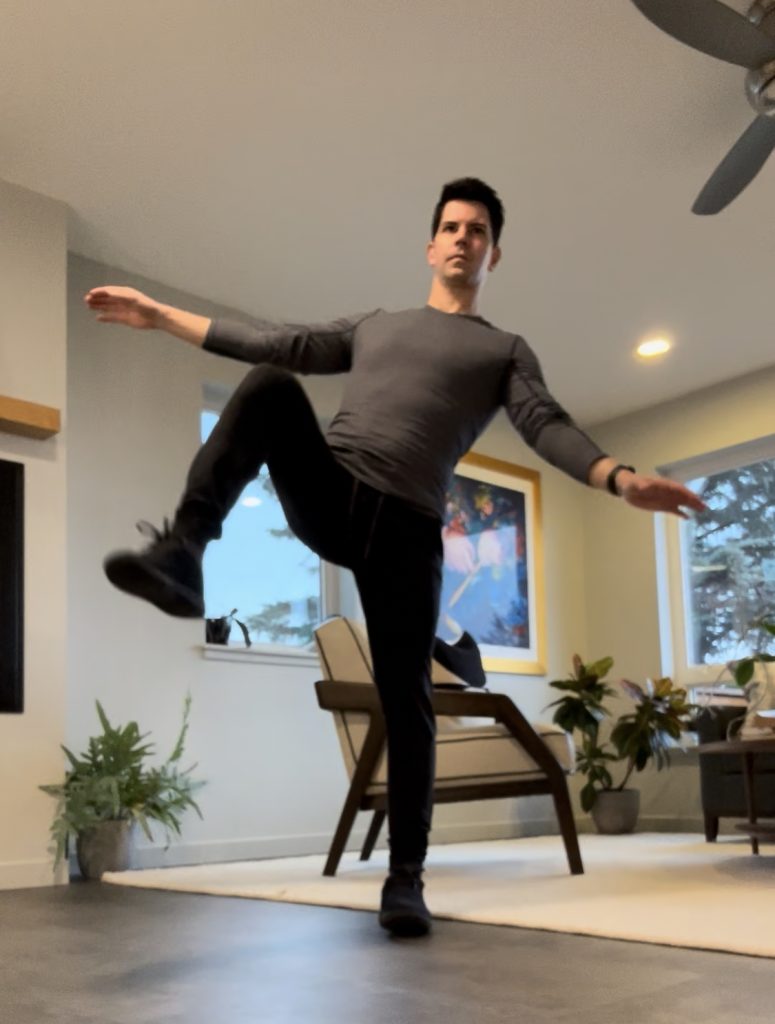
For most ankle sprains, the treatment is guided exercise: gentle movement early, then strength and balance work so your ankle can handle what you ask of it. Your plan usually moves through four stages.
Ways to manage the swelling, a way of walking your ankle tolerates, and gentle ankle movement in the first days and weeks.
Bending the ankle up, down and side to side, so walking, stairs and squatting stop feeling stiff.
Your calf, foot and hip, plus standing on one leg, so the ankle stays steady on uneven ground.
Hopping, quick turns and whatever your sport or trail asks for. Then a routine you can keep on your own, so the balance work doesn't stop when the plan does.

At your first visit (the Body Assessment), your physical therapist asks how you hurt it, whether you could walk on it right after, and what still bothers you, then watches you move by video: walking, rising onto your toes, a small squat, standing on one leg. We look at your knee and hip too, since the whole leg works together. If your answers point to a possible fracture, we’ll tell you to get an X-ray first. A physical therapist doesn’t diagnose disease; what we find is which movements your ankle tolerates now, which it doesn’t yet, and how to build from one to the other.
Curbs, stairs, potholes and trail roots: the foot rolls inward before you can catch it.
Coming down on someone else's foot or on the outside edge of your own.
Common in basketball, soccer, tennis and pickleball. The 7 most common pickleball injuries
An ankle that was sprained before is more likely to be sprained again, especially when its balance never fully came back.
Muscles that can't react fast enough to catch the roll.
Worn-out shoes, high heels, or legs that are tired late in a game or a long hike.
Many mild ankle sprains feel much better within a few weeks. More severe sprains can take a few months, and the ankle can stay weak or wobbly after the pain settles. That leftover weakness and poor balance is a common reason the same ankle gets sprained again.
Your 8-week plan starts from where you are and changes at every check-in. Every ankle is different, so we won’t promise a timeline, but we will tell you honestly what we see.
Wondering why your plan has you standing on one leg? Start here: I never stand on one leg, so why are you making me?

$489 for 8 weeks, about $61 a week

No referral needed. HSA and FSA accepted. Less than the cost of two traditional clinic visits.
Step 1
Talk about what hurts and what you want to get back to.
Step 2
30 minutes by video, from home, in clothes you can move in.
Step 3
Daily exercises in the app, starting the next day.
Step 4
Short video visits whenever something changes.

Dr. Alex is the physical therapist behind motivPT. He works with you by video, watches how you move, and adjusts your plan as you go. Meet Dr. Alex
For most ankle sprains, the treatment is exercise and education, and both can be delivered by video. Your therapist watches you walk, balance and move on camera, adjusts each exercise and changes the plan as you improve.
No referral is needed. Start with a free 15-minute consult.
Yes. motivPT accepts HSA and FSA cards.
Most ankle programs start with a floor, a wall and a stair. Your plan includes a FitKit with the equipment it needs.
If you can put weight on it, walking as far as it comfortably allows usually helps more than keeping off it. If you can't take four steps, or the ankle bones hurt to press, get it checked for a fracture first.
A brace or tape can help in the first weeks and when you go back to sport. It works best alongside strength and balance work, not instead of it, and your therapist will tell you when it makes sense for you.
No. An ankle that still feels stiff, weak or unstable months later can still build strength and balance. Your plan starts from where your ankle is now.
Colorado, Michigan, Minnesota and Wisconsin.
Who we help: adults 60 and older · families helping a parent · recovery after surgery
Book a free 15-minute consult. We’ll ask what’s going on and tell you honestly whether online PT is a good fit.
Seeing patients in Colorado, Michigan, Minnesota and Wisconsin.