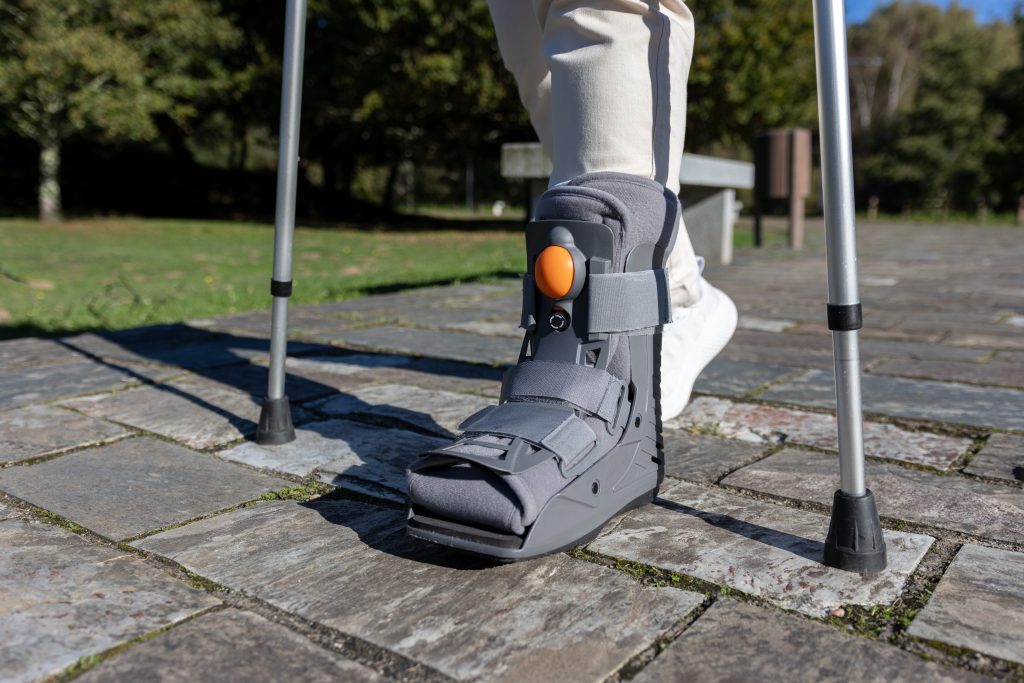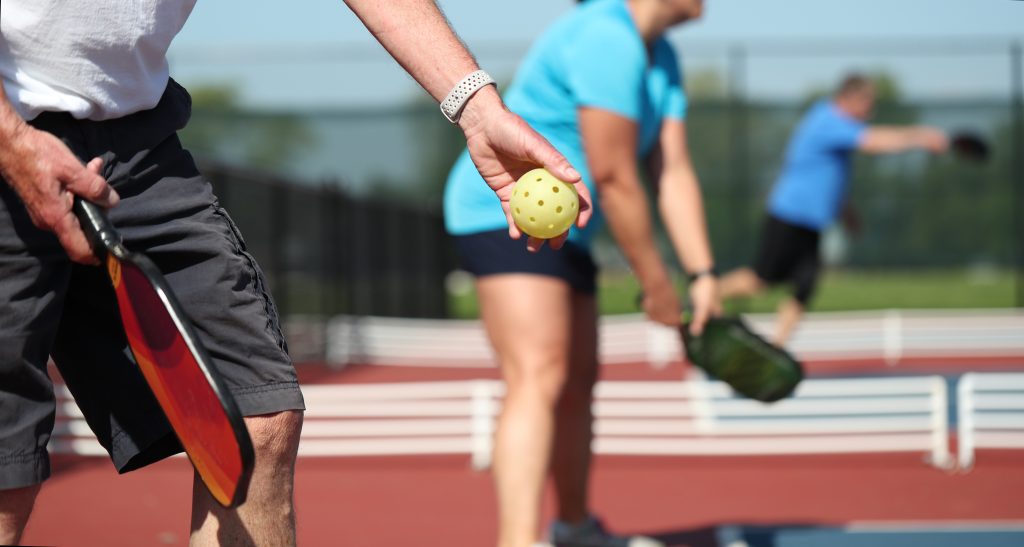
It’s the craze that’s sweeping the nation and injuring Americans in its wake–it’s Pickleball, and it’s everywhere. Over 24 million Americans played in 2025, and nearly 80,000 of those people ended up in the emergency department for injuries like fractures, strains, and sprains. As your physical therapist, I’m the one who sees you after your injury, and, these days, I’m seeing a lot of Pickleball injuries. Am I here to warn you away from Pickleball? No, actually. The reasons people play are pretty great; it’s fun, it’s social, it’s inexpensive to do, and, the number one reason people play, it’s exercise.
Anything that gets you moving is a winner in my book. But there are ways to prevent injuries and stay healthy, so you don’t find yourself sitting on the sidelines watching your friends have fun without you.
In this post, we’ll review the seven most common types of injury, and I’ll offer tips on keeping your body healthy so you can stay on the court, swinging your paddle.
If you’re reading this following an injury, don’t worry; I’m an online physical therapist, and I help people recover from these injuries all the time. You can schedule a free consult with me here.
Who is Playing Pickleball and Why is it Injuring Them?
Who plays? In short, everyone. Pickleball has cracked the 25 most popular sports in America, and it isn’t just a game being played in retirement communities. The age 55+ demographic might represent the largest bucket of players, but the average age of a Pickleball player today is 35 years old. It’s been welcomed enthusiastically by retirement communities, yes, but also groups of young professionals, families, and kids, alike.
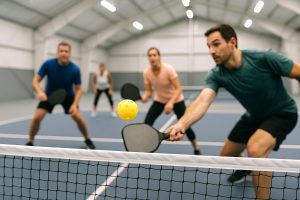
Why are they getting hurt? People see a small court, a lightweight paddle, and a hollow plastic ball, and they underestimate what they’re about to ask of their bodies. Pickleball is a game, and most people like to win games, so what starts as hitting a ball back and forth with friends, quickly becomes competitive and athletic. Pickleball requires you to move side to side, to lunge, to change directions quickly, to rotate and pivot, and to repeatedly reach overhead. These are all great movements for your body, as long as your body is ready. Not preparing your body for these demands is what leads to injury, and preparation doesn’t just mean warming up that day; it means preparing your body off the court, too.
What Injury Looks Like and the 7 Most Common Injuries
Pickleball requires a combination of strength, mobility, and balance. These are all related but different components of a person’s fitness. If parts of your body are lacking in one of those areas, that’s where the injury is most likely to happen.
Take my patient, Mary Bridget. Mary Bridget is an active senior athlete. She plays tennis, she walks, she bikes, and when Minnesota is freezing cold for 6 months of the year, she’s taken to Pickleball. Mary Bridget, now in her 70s, had ankle surgery in her 20s. She’s been active despite it, but she always knew one ankle was weaker and less flexible than the other. As Mary Bridget got more involved with Pickleball, she started noticing sudden pain in her ankle, like it was going to give out; she noticed it most with the quick movements that required changing direction on the court.
Here’s Mary Bridget on a recent bike trip with her family.

Mary Bridget contacted me, and we did a telehealth assessment where it became obvious that Mary Bridget’s strength, mobility, and balance were significantly different from one ankle to the other. We started working on single leg stability exercises and stretches that would get her ankle moving better. As her balance and flexibility improved, we changed the exercise focus to include strengthening while working on quick agility movements and directional changes. I tested Mary Bridget’s balance and ankle strength each week, and a couple months later, both ankles were performing equally. Mary Bridget was playing Pickleball at 100% without getting any of those pains.
Even an injury or surgery that happened 50 years ago can impact how your body moves today. But, here’s the important part; it can change, and it can improve. You just need to take the time to address it with someone you trust to guide you.
It’s not a coincidence we’re talking about ankles, because this is one of the most common places people get injured.
The 7 Most Common Pickleball Injuries
Calf Strains
Calf muscles do a lot to help you accelerate and push off with your toes. Sometimes these muscles get pulled from overuse, from a big explosive movement, or because you never warmed up. Cold muscles are generally less prepared to handle sudden movement demands.
Most calf strains happen when someone lunges for a ball or tries to sprint after a shot they didn’t expect to reach. You’ll often feel a sudden pull, tightness, or even a popping sensation in the back of your lower leg. It’s an injury that stays with you and it might even start hurting with basic walking.
Achilles Tendon Injuries
The Achilles tendon connects your calf muscles to your heel and absorbs tremendous amounts of force every time you push off, jump, or change direction.
Achilles injuries can range from mild tendon irritation to a complete rupture. The tendon can get injured over time, and people tend to notice irritation with rising up onto their toes or moving quickly. A complete rupture is something you’ll know immediately–trust me, I’ve ruptured mine. It feels like a ton of pressure, a loud pop, and you won’t be able to stand on that leg afterward. An irritating and crabby tendinitis is much more common than a rupture.
If you’ve been noticing morning stiffness in your Achilles, pain when walking up stairs, or soreness after playing, don’t ignore it. Tendon recovery has to be addressed in a specific way.
Ankle Sprains
Quick cuts, pivots, and lunges make ankle sprains one of the most common pickleball injuries.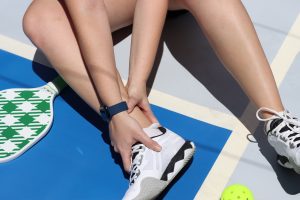
The frustrating thing about ankle sprains is that many people assume they’ll heal on their own. The swelling goes away, the pain decreases, and life moves on. Unfortunately, many people never regain their full balance, strength, or ankle mobility afterward. Not rehabbing your ankle after a sprain increases the likelihood of another sprain. I cannot tell you how often I see this, and how many people become chronic ankle sprainers, needlessly.
It’s similar to what happened with Mary Bridget. Her old ankle injury wasn’t causing constant pain, but it was still affecting how she moved decades later.
An ankle that doesn’t move well forces other parts of your body to compensate. Over time, that can cause knee pain, hip pain, balance issues, and, weird enough, back pain. Don’t ignore ankle sprains, especially if they’re becoming a pattern.
Knee Pain
Not every knee injury involves a torn ligament or meniscus. More commonly, I see people develop irritation around the kneecap or soreness from repeatedly loading tissues that aren’t prepared for the demands of the sport.
Pickleball requires frequent squatting, lunging, stopping, and changing directions. These movements demand hip strength and the strength of your hips has the biggest influence on the mechanics of your knee. If your hips and legs aren’t strong enough to absorb those forces, your knees often become the weak link.
The good news? Most Pickleball-related knee pain responds very well to strengthening, mobility work, and gradually returning to play.
Shoulder Pain
While the equipment used in Pickleball is lightweight, the sport asks a lot of your shoulders.
Repeated serves, overhead shots, and reaching for difficult returns can irritate the rotator cuff and surrounding structures. Players often notice pain when reaching overhead, difficulty sleeping on one side, or soreness that lingers long after the match is over.
Things like posture, trunk mobility, and even how you use your computer can have an impact on your risk of injuring your shoulder. We use our arms a lot in life, so something like a rotator cuff strain can really impact you with many of your day to day activities.
Low Back Pain
The lower back is another common complaint, especially among newer players.
Every time you reach for a ball, rotate for a shot, or bend to return a low bounce, your spine participates. If your hips don’t move well or your core isn’t providing enough support, your lower back often picks up the slack.
Most people assume back pain means they should stop moving. In reality, the opposite is often true. The right exercises, performed consistently, usually help people recover faster and become more resilient on the court. You know who’s a helpful neighbor to your back? Your butt. Strengthening it will help your back significantly.
Bone Fractures
Unfortunately, some Pickleball injuries are more serious.
Falls are a leading cause of fractures, particularly among seniors. Wrist fractures happen when people instinctively reach out to catch themselves. Hip fractures and arm fractures can also happen, often from a hard landing. These are the injuries that bring people into the emergency department.
The best way to prevent fractures isn’t simply being careful. It’s improving the things that make falls less likely in the first place: balance, reaction time, leg strength, and confidence moving in different directions. Being “careful” might reduce fall risk a little. Strengthening your body and working on balance reduces fall risk a lot.
How to Prevent Pickleball Injuries
The good news is that most Pickleball injuries aren’t random bad luck. When I assess someone who gets injured, I almost always find one or more of the following:
- Limited mobility
- Poor balance
- Strength differences or weakness
- Previous injuries that never fully recovered
- Sudden increases in activity
Here are my favorite injury-prevention strategies:
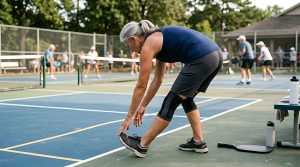
1. Warm Up Before You Play
A quick 5-10 minute walk will do a lot to prevent injury and get you ready. You can also perform some gentle leg swings, practice lunges, do a few calf raises, and get your body moving before the first point starts.
2. Work on Single-Leg Balance
Pickleball is played one leg at a time more often than most people realize. If you can’t comfortably balance on one leg for 30 seconds, that’s a good place to start.
3. Maintain Ankle Mobility
Your ankles are interacting directly with the court. If one ankle is significantly stiffer than the other, your body will find a way around it, and compensation often leads to pain somewhere else.
4. Strength Train
Strong muscles absorb force better than weak muscles. You don’t need to become a powerlifter. Consistent body-weight exercises like squats, step-ups, calf raises, and lunges can dramatically improve your ability to tolerate the demands of the sport.
5. Don’t Ignore Small Problems
Most major injuries first give warning signs. A sore Achilles. A stiff ankle. A knee that hurts after every match. Addressing these issues early is easier than recovering from a major injury later.
The Bottom Line
Pickleball is one of the best things happening in recreation right now. It’s getting people active, connecting communities, and helping many adults exercise in a way they actually enjoy.
I don’t want you to stop playing. I want you to keep playing.
If you’re dealing with an injury, noticing nagging aches and pains, or wondering whether an old injury is holding you back, that’s exactly what physical therapy is for. Sometimes all it takes is identifying one weak link, just like we did with Mary Bridget’s ankle.
If you’re not sure where to start in keeping your body safe, or if you’re hurting and want to get going on your recovery, you can work with me. I do everything online with my studio, motivPT. Book your free 15-minute consult to talk with me about your concerns and learn more about how we work! My online physical therapy and personal training can help you regain what you thought you’d lost and go strongly into your future.
At motivPT, we believe your body deserves to feel great.